Parked

Pricing

โ‚ฌ1 per employee per country per year. Value


We do our homework

Each research project follows five steps:

Identify
We identify twelve domains where behavior can be observedโ€”from childhood and education through professional life, law, media, and more. The domains are representative of the culture and rich in evidence.

Gather
We gather information from these domains, remove what is irrelevant, and organize the remainder for analysis. For each domain, we consider its historical formationโ€”how it developed and why it operates as it does today.

Analyze
We identify patterns that appear across multiple domains. A pattern must appear in at least ten of the twelve domains to qualify as fundamental. Patterns below this threshold are not considered for analysis.

Describe
We describe the validated patterns in clear, precise natural language, optimized for AI-powered semantic search. The descriptions offer practical guidance, not academic abstractions.

Refine
We review and refine our analysis on an ongoing basis. Spot-checking by practitioners. Feedback loops. The goal is the constant pursuit of accuracy. Research is re-searching.


We ensure depth

Cultural intelligence is only as useful as its depth:

Inductive not Deductive
We start with observation, not theory. Let patterns emerge from evidence rather than fitting evidence into pre-existing frameworks. We discover what a culture is like by examining what its members do and have done.

Systematic and Repeatable
The method follows the same steps, with the same rigor, every time. Whether applied by a human researcher or together with AI, the process produces consistent results. This is not impressionistic insightโ€”it is structured inquiry.

Rooted. Representative. Observable.
Patterns must be rooted in how the society has been formedโ€”its history, institutions, and foundational choices. They must apply broadly across the population. The evidence is observable. We focus on what people do and why.

Cross-Domain Validation
A pattern that appears in only a few areas of society is weak. A pattern that appears across multiple domainsโ€”business, education, family, law, history, governanceโ€”is robust. Cross-domain consistency is the test of an authentic cultural pattern.

First Describe then Interpret
First: what happens. Then: what it means. These are kept separate. We do not interpret prematurely. Description is factual. Interpretation is analytical. Mixing them introduces bias and weakens the foundation.

Actionable Output
The end result is not academic theoryโ€”it is understanding people can apply. The research answers: This is how they think. This is what to expect. This is how to work effectively with them. Insight without application is incomplete.

Constant Refinement
The method includes feedback loops and spot-checking by practitioners. We adjust when evidence contradicts. Research is never finalโ€”it is the best current understanding, open to improvement as new evidence emerges.

Indisputable. Unchallengeable.
The evidence is factual, not opinion. It can be verified. We draw from documented history, observable institutions, measurable behaviors. Patterns grounded this way cannot be easily dismissed. The research stands because the foundation is solid.


More about Patterns

Deep patterns reveal underlying logics:

Many vs. One
One shallow pattern illuminates just one situation. One deep pattern illuminates many situations.

What and Why
Shallow patterns tell you what people do. Deep patterns tell you what people do and why they do it.

Transfer across Situations
Shallow patterns are context-bound. Deep patterns are generative, addressing different situations.

Actionable Guidance
Shallow patterns describe. Deep patterns guide. Actionable guidance is the true added value.

Reduced Confusion
Shallow patterns overlap and conflict. Deep patterns apply without competition from overlapping alternatives.

Improved Semantic Search
Shallow patterns match narrow queries. Deep patterns match broad queries. This increases retrieval accuracy.


We research how business cultures think and work. 
Companies embed our content into their AI systems. 
So that colleagues collaborate better across cultures.

Test our chatbot above. Note the quality of our work. 
Enterprise AIs scrape the web. We do the research.
Imagine this intelligence embedded in your systems.


Research Teams

Each country-topic project is executed by a research team consisting of graduate students either native to that country or with significant experience living and or working in it.


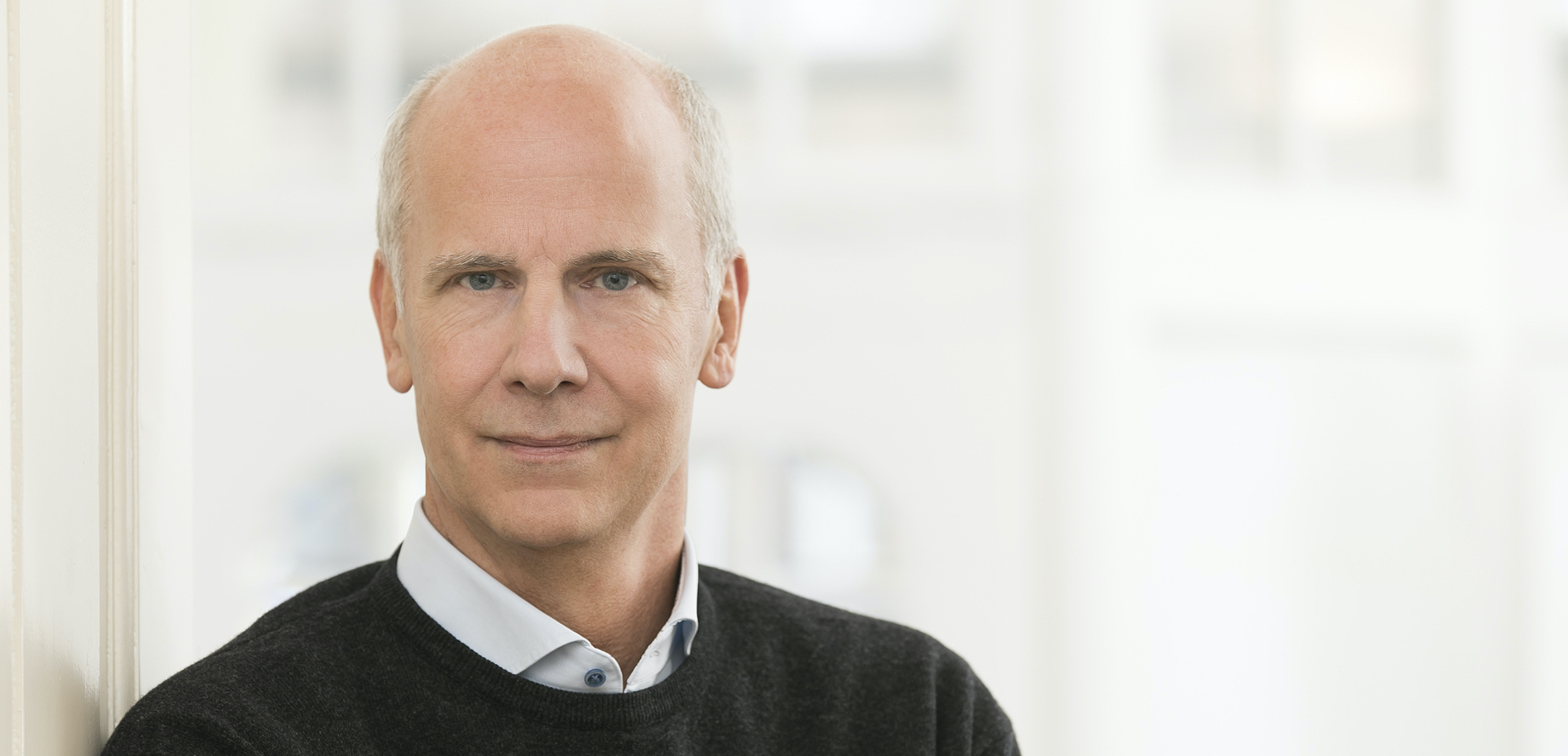
John Otto Magee

I am an American who has lived, studied and worked in Germany for more than three decades. See below.

I support multinational teams via Consulting. These four Interviews give you a sense for how I think.


See our First Project.

as well as Interviews.

And, if you are curious about how I can personally help multinational organisations, see Consulting.
Background

In Fall of 1988 I moved from Philadelphia to West Berlin:


Graduate Studies (1988โ€“1992)

Graduate studies is work. Especially in a foreign language. And at a German university. I studied Modern History. My focus was on Germany post-World War II. I chose the Freie Universitรคt in West Berlin because it was on the front lines of what then was still the Cold War.

My Master’s thesis was on the “Dissonances between the Kennedy and the Adenauer administrations during the Second Berlin Crisis.” Dissonance is a subtle word for differences. The differences were profound. About how to respond to the pressure Moscow was putting on the three allied powers in West Berlin: France, Great Britain, United States. The Soviet Union wanted them out.

I researched, analyzed and described how Washington and Bonn struggled to develop a joint response to that pressure. I could not know then – in 1992 – that I would spend another 25 years researching, analyzing and explaining where and why Americans and Germans struggle to work together.

My graduate studies laid the foundation for my expertise in helping Germans and Americans to understand each other, in order to collaborate with each other.


CBS News (1989โ€“1990)

On November 9, 1989 the East German regime opened up the Berlin Wall. It was the beginning of the end of East Germany, the Soviet Union, the Warsaw Pact, and of the communist regimes of Eastern Europe.

On November 10, at the Brandenburg Gate, I offered my services to CBS News. Around the clock, until Christmas, I helped CBS cover those historical events: Briefed producers and journalists on the political-historical context. Arranged high-level interviews. Interpreted and translated.

CBS asked me to continue supporting their news coverage: First free elections in East Germany in March 1990. Two-Plus-Four-Negotiations in June-July 1990. German Unification in October 1990. In December the first all-German federal elections since 1933.

I was in the right place. At the right time. Studying the right subject. I learned how modern news organizations cover fast-breaking, historical events. And I helped CBS News explain to Americans what was happening in Berlin, in Germany, and in Europe.


Intercultural Training (1993โ€“1996)

I had been in Germany for five years when I met Andreas Bittner, co-founder of IFIM. Andreas opened my eyes. I began to understand the influence of national culture. On my life and work as an American in Germany with the Germans.

Andreas and I initiated the USA-Seminar at IFIM. Five full days. For German management and subject area experts. From major global companies such as adidas, Allianz, BASF, Bayer, BMW, Bosch, Continental, Daimler, Deutsche Bank, Lufthansa, Merck, SAP, Siemens, ThyssenKrupp, Volkswagen. We prepared them for long-term delegations to the United States.

The seminar addressed core topics: communication, decision making, leadership, feedback and motivation, processes, product philosophies, relationship management. Andreas and I worked them hard. Boot camp. We discussed, debated, and laughed. We went as deep as possible.


German Bundestag (1995โ€“1999)

I wanted to understand the Germans at a deeper level. I set my eyes on politics. After a year of intense networking, and a second year of political analysis performed gratis, I was introduced to the leadership of the Christian Democrats (CDU) in the Bundestag. Wolfgang Schรคuble was the Majority Leader. Helmut Kohl the Chancellor.

Analysis. I explained the underlying historical and cultural currents moving political developments in the U.S. From the American perspective, but in the German language, with an understanding of German history and politics. I was a translator in the truest sense of the word.

People. And I brought people together. Americans and Germans. People who needed to know and understand each other. Office-holders from both parties and both executive and legislative branches. But also the experts who advised them. I established and deepened relationships. Between Germans and Americans.

I helped the leadership of Germany’s ruling party to better understand America and Americans. Their politics, political parties, the Clinton Administration, the Republican opposition in the Congress, think tanks and thought leaders. And I helped the Americans to better understand their counterparts in Germany.


Siemensโ€“Westinghouse (1999โ€“2002)

Siemens had acquired Westinghouse. Power generation. Post-acquisition integration, especially cross-border, is extraordinarily complex. After eleven years in Germany I was able and ready to help. With my knowledge of language, history, politics, and in the widest sense culture.

I was a one-man consulting practice within Siemens with profit and loss responsibility. I made sure that colleagues from both companies understood three things: Where they differ in how they think, therefore work. The impact of those differences on their collaboration. And how to make the differences help and not hurt them.

I applied my expertise at all levels, in all disciplines, and at all locations in the U.S. and Germany. I coached senior-level management, conducted seminars for mid-level management and subject area experts, and executed customized workshops on difficult integration topics.


Independent Consultant (2003โ€“Present)

At the beginning of 2003 I went into business for myself. Siemens, however, continued to engage me for another five years. With each year we both broadened and deepened integration.

In 2009 Cornelsen Verlag Berlin published my book entitled Verstehen sich Deutsche und Amerikaner?. It is a fictitious story based on my years supporting Siemens-Westinghouse. Read the Chapter Philadelphia.

Since going independent more than two decades ago I have gained as customers additional major DAX30 as well as Fortune25 companies. With all of them the focus has always been the same: to help multinational teams collaborate better by addressing cultural differences.


Back to About.

Contact

John Otto Magee

Poppelsdorfer Allee 90
53115 Bonn, Germany

Mobile +49 171 860 6637
john.magee@understand-culture.com

VAT DE234907318
TaxID 81126450797

Connect with me on LinkedIn.


About

John Otto Magee

I am an American who has lived, studied and worked in Germany for more than three decades.ย 

I created UC to make cultural intelligence available to multinational companies through their AI systems.

And, I work directly and personally with selected multinational organizations to help them succeed.

See Background โ€” Interviews โ€” Consulting.


Enterprises

We provide cultural intelligence your teams can actually useโ€”embedded in the AI systems they already work with.


Intelligence

We offer research-based patterns explaining how cultures think and work. Not stereotypes. Not generic AI guesses. Instead, structured intelligence, validated across multiple domains, written for real-world application.


Delivery

We deliver our intelligence via secure cloud storage. Your technical team integrates it into your internal AI systemsโ€”forums, tools, workflows, wherever collaboration happens. You receive updates as we produce new analysis.


Pricing

โ‚ฌ1 per employee per country per year, including any and all new analysis produced about those countries. Value


Interested?

Contact us. Or test the chatbot firstโ€”it demonstrates exactly what your teams would have access to.


Working across cultures is complex.
We explain how they think and work.
So that you can succeed in your job.

Countries
Brazil. China. France. Germany. India. Italy. Japan. United Kingdom. United States.

Topics
Agreements. Communication. Conflict Resolution. Customer-Supplier. Decision-Making. Feedback. Information Sharing. Leadership. Motivation. Negotiation. Persuasion. Planning. Problem-Solving. Processes. Products. Services.


understand-culture
Privacy Overview

This website uses cookies so that we can provide you with the best user experience possible. Cookie information is stored in your browser and performs functions such as recognising you when you return to our website and helping our team to understand which sections of the website you find most interesting and useful.